
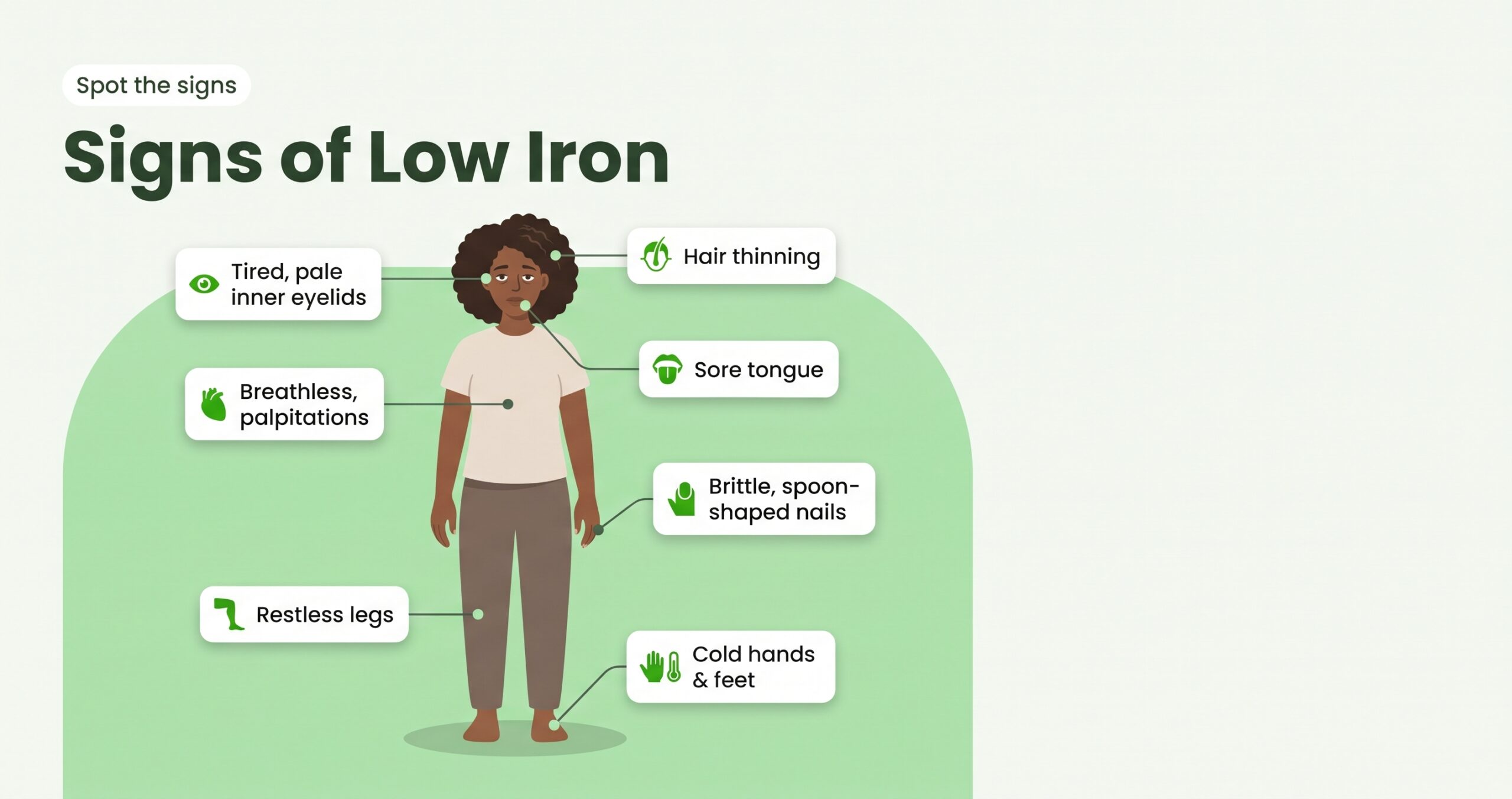
The most common symptoms of low iron are persistent tiredness, shortness of breath, noticeable heartbeats, paler than usual skin and headaches. Low iron can also cause brittle nails, hair thinning, restless legs, a sore tongue and cravings for non-food items. Signs often start mild and build gradually as iron stores fall.
Many people feel the effects of low iron before it ever shows up as anaemia, which is why this guide covers the full range of signs, who tends to notice them first, and when they are worth acting on.
What “low iron” actually means
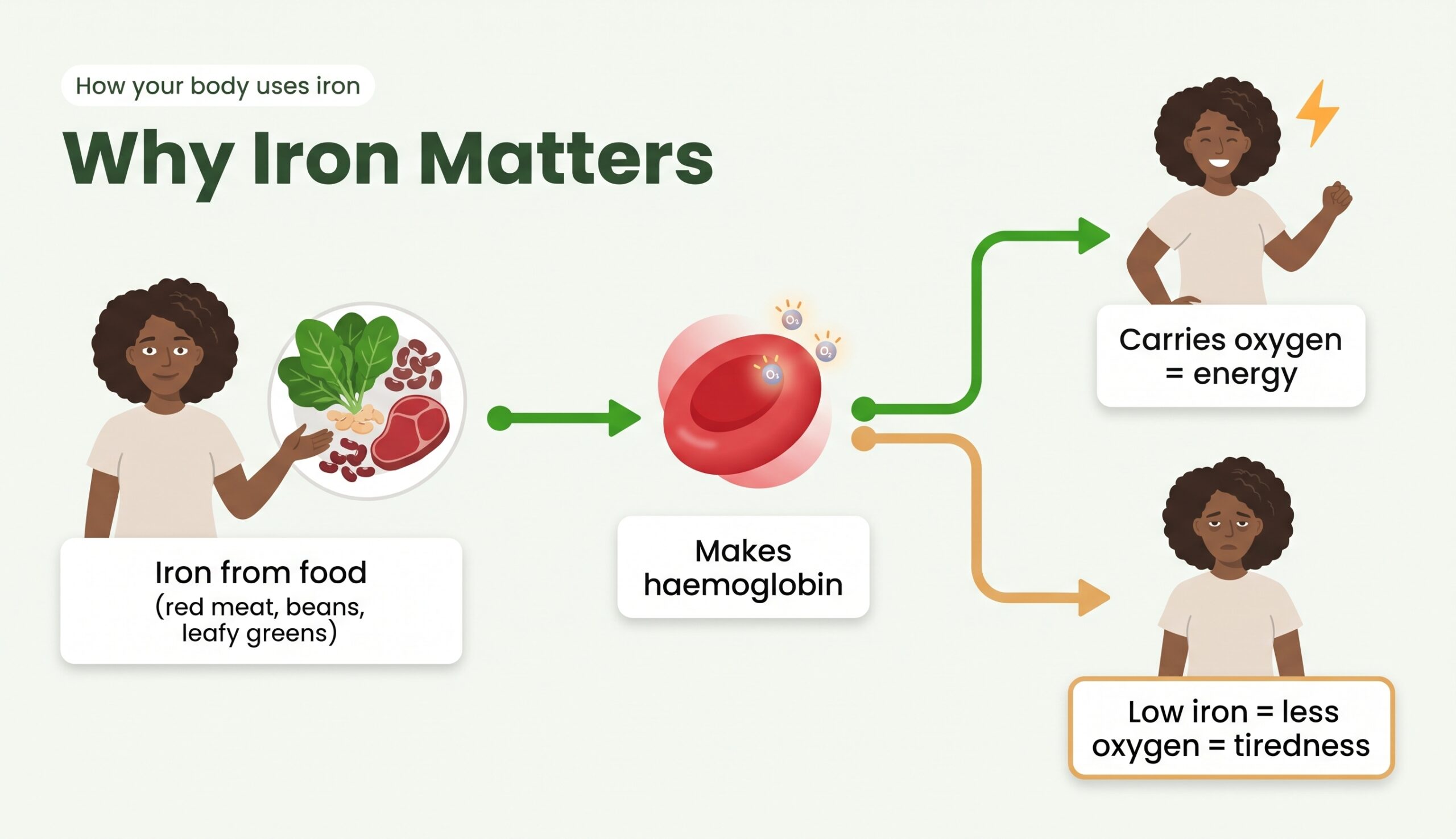
Your body uses iron to make haemoglobin, the part of red blood cells that carries oxygen around the body. When iron runs low, you make less haemoglobin, so tissues get less oxygen and you start to feel it. Low iron sits on a spectrum. First your stored iron (measured as ferritin) drops, which can already cause symptoms while your haemoglobin still looks normal. If it keeps falling, it becomes iron deficiency anaemia, where haemoglobin itself is low. This is the key point most symptom lists miss: you can feel unwell from low iron before a standard test calls it anaemia, which is why ferritin is checked alongside a full blood count.
The 12 common symptoms of low iron
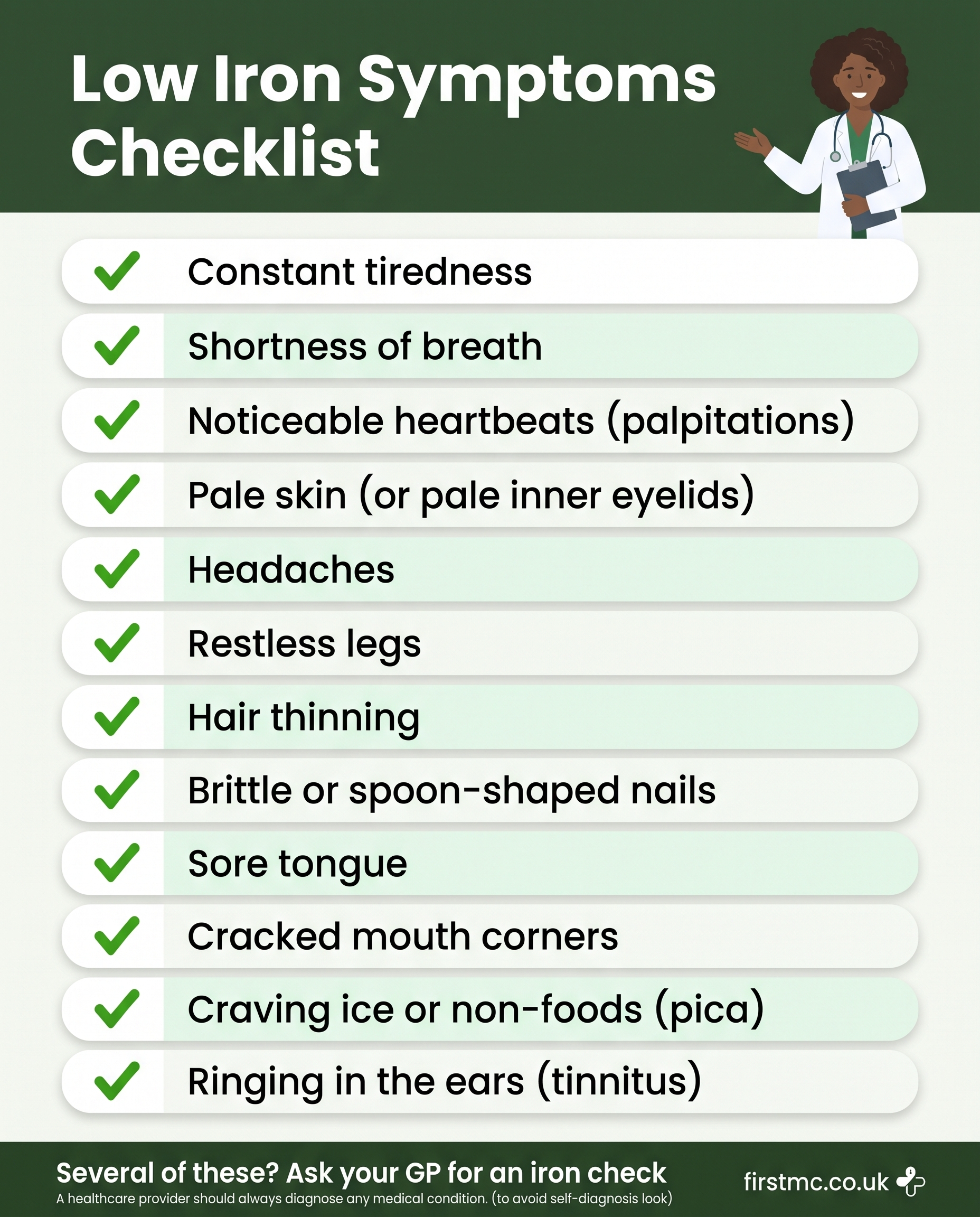
Not everyone gets all of these, and they overlap with other conditions, but these are the symptoms of low iron signs most often linked to low iron.
- Tiredness and low energy. The most common sign. Less oxygen reaching your muscles and brain leaves you drained even after rest. (NHS)
- Shortness of breath. Getting winded during everyday tasks, as your body works harder to move oxygen. (NHS)
- Noticeable or racing heartbeats. Palpitations, as the heart pumps faster to compensate. (NHS)
- Paler than usual skin. Often easiest to see inside the lower eyelids, on the gums or in the nail beds. (NHS)
- Headaches. Frequent headaches, sometimes with lightheadedness or trouble concentrating. (NHS)
- Restless legs. An uncomfortable urge to move your legs, often worse at night. Low iron is a recognised trigger for restless legs syndrome.
- Hair thinning. More hair than usual coming out when you brush or wash it. (NHS)
- Brittle or spoon-shaped nails. Nails that break easily or curve inwards like a spoon. (NHS)
- A sore or swollen tongue. The tongue can feel tender, smooth or inflamed. (NHS)
- Cracks at the corners of the mouth. Painful splits or mouth ulcers at the sides of the lips. (NHS)
- Cravings for non-food items (pica). Wanting to chew ice, paper or chalk is a classic, under-recognised sign. (NHS)
- Ringing in the ears (tinnitus). A ringing, buzzing or hissing noise with no outside source. (NHS)
Early signs vs more advanced signs
Low iron tends to creep up, which is why it is easy to miss or blame on a busy life.
| Earlier, milder signs | More advanced signs |
|---|---|
| Tiredness, feeling run down, reduced stamina, mild breathlessness on exertion, cold hands and feet, trouble concentrating. | Marked breathlessness, frequent palpitations, clear skin pallor, hair and nail changes, sore tongue, restless legs, dizziness. |
Because tiredness is so easy to explain away, low iron is one of the common things worth ruling out when you are always tired for no obvious reason. Thyroid problems and low vitamin B12 can cause very similar symptoms, so the signs alone cannot tell you which one it is.
Symptoms of low iron in women
Women of reproductive age are more likely to run low on iron, mostly because of monthly blood loss. Heavy periods are one of the most common causes in the UK, and the heavier or longer your periods, the more iron you lose. The symptoms are the same as above, but women often notice the tiredness and breathlessness first, sometimes putting them down to a hectic schedule.
Pregnancy raises iron needs sharply, and low iron in pregnancy is usually down to the extra demand on the body’s iron. Pregnant women are routinely checked for it, so always follow your midwife’s or GP’s advice rather than self-treating.
Less obvious signs people miss
Beyond tiredness, low iron has a set of quieter clues that are easy to overlook:
- Signs in the eyes. The inside of your lower eyelid can look pale rather than healthy pink, which reflects the paler skin that comes with low iron.
- A strange taste or altered appetite, including the pica cravings mentioned above. (NHS)
- Itchy skin without an obvious rash. (NHS)
- Difficulty swallowing, a less common but recognised sign. (NHS)
What causes low iron
Symptoms are only half the story. Low iron usually comes from one of a few causes, and finding the cause matters as much as treating the iron: heavy periods, pregnancy, a diet low in iron, and any source of ongoing blood loss such as stomach ulcers, long-term use of anti-inflammatory painkillers, inflammation in the bowel, or piles. Less commonly, bleeding from the bowel or stomach can be the cause, which is why unexplained low iron in some adults is always investigated properly.
How low iron is confirmed
You cannot diagnose low iron from symptoms alone, because they overlap with so many other conditions. It is confirmed with a blood test that looks at your stored iron and how your body is using it, usually ferritin alongside a full blood count, and sometimes serum iron and transferrin saturation. If you want to understand what those markers mean, our guide to what a full blood count shows is a good starting point.
Your GP can arrange these tests. If you would rather check your levels without waiting, the only way to confirm low iron is a simple iron and ferritin blood test.
When to see a doctor
See a GP if you have the symptoms above and think your iron might be low, so the cause can be found and the right treatment started. Seek urgent medical help if you have severe or sudden breathlessness, chest pain or fainting. Do not start high-dose iron supplements on your own without medical advice, because too much iron can be harmful and the underlying cause still needs checking.
Frequently asked questions
Usually tiredness, shortness of breath and paler skin, which build up gradually and are easy to blame on being busy.
Symptoms can point to it, but only a blood test confirms it, because the signs overlap with thyroid problems, low B12 and other conditions. Ferritin is the usual marker checked.
Low iron can cause palpitations, poor concentration and low mood that can feel like anxiety, and the noticeable heartbeats it causes are often mistaken for it. The direct evidence is limited, so it is worth getting checked rather than assuming.
It can progress to iron deficiency anaemia, with worsening tiredness and breathlessness, and can put extra strain on the heart. In pregnancy it needs prompt attention.
Usually with iron supplements prescribed by a GP plus treating the cause, alongside more iron-rich foods. Do not start high-dose iron without advice.
This article is general information and does not replace personal medical advice. Symptoms of low iron overlap with many other conditions, so always speak to a qualified clinician about your own situation, especially if you are pregnant.


