
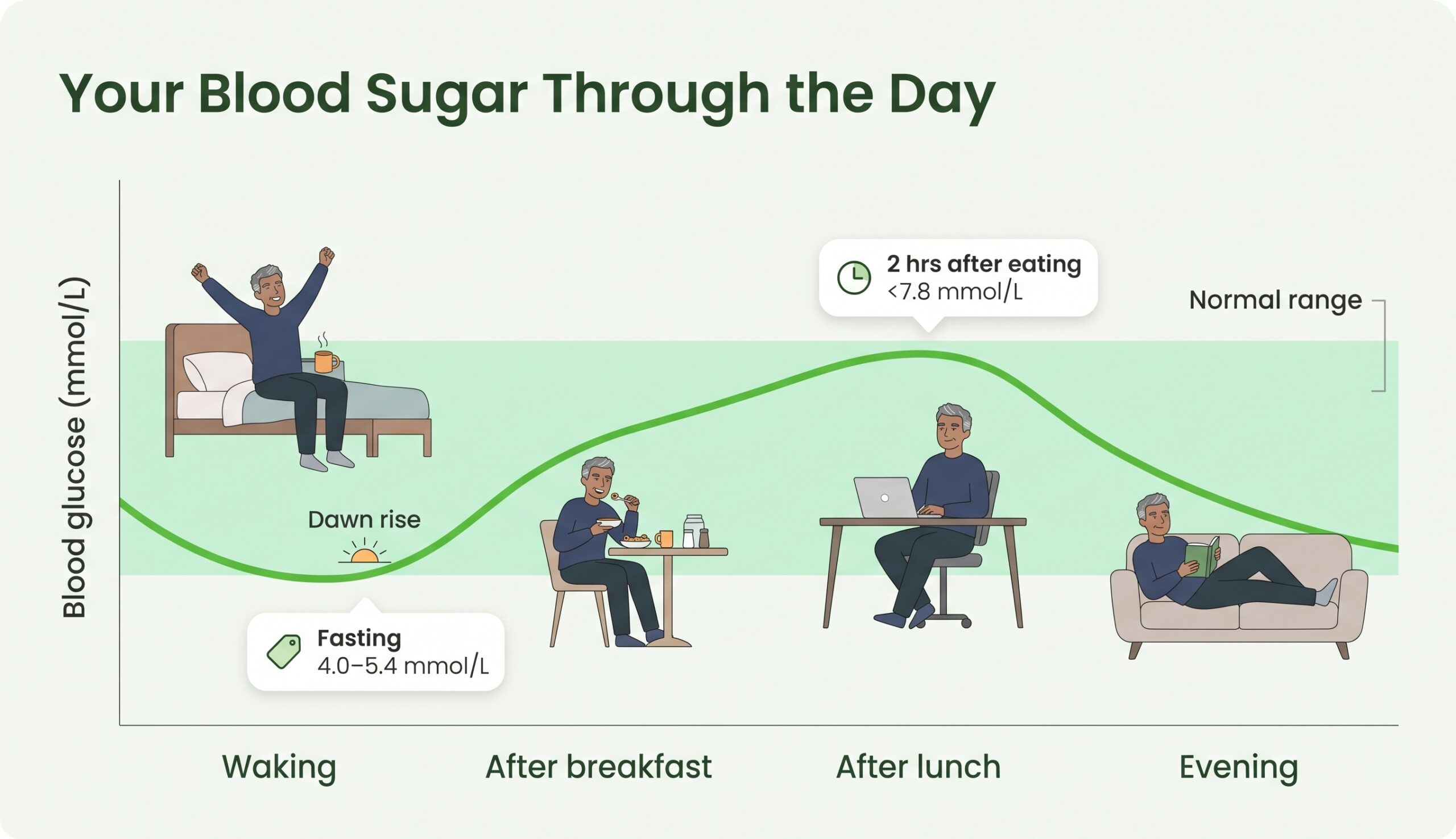
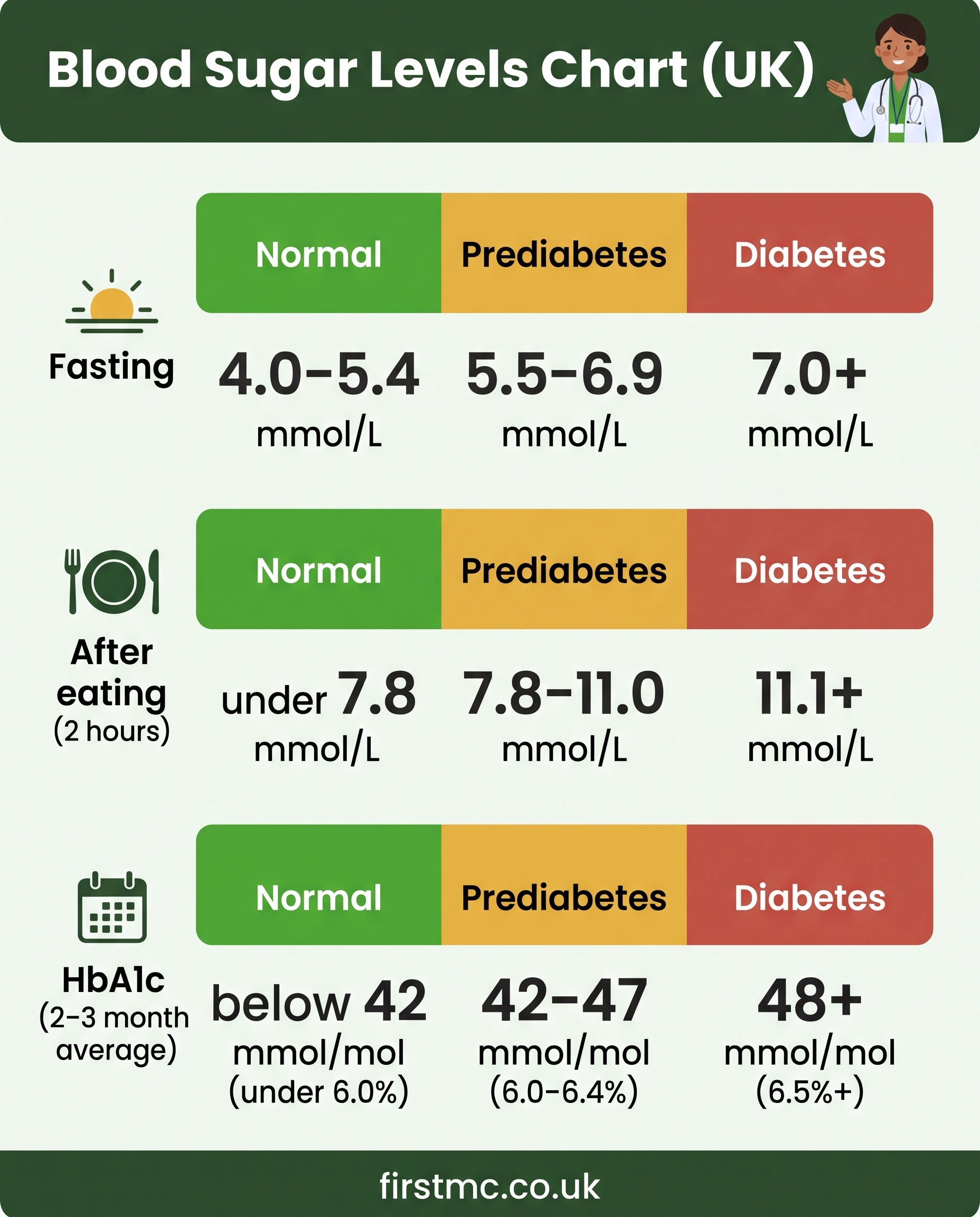
A normal blood sugar level for an adult without diabetes is 4.0 to 5.4 mmol/L when fasting, and under 7.8 mmol/L two hours after eating. On an HbA1c test, a normal result is below 42 mmol/mol (6.0%).
Those figures are UK measurements. Blood glucose here is read in mmol/L, and the HbA1c test in mmol/mol, which is why they look nothing like the US numbers (mg/dL and %) that fill most search results. The full UK picture, and what your own reading means, is below.
Normal blood sugar levels: the full UK chart
Blood sugar is not one number. It moves through the day and depends on when you last ate and which test is used. This is the complete picture for an adult without diabetes, in UK units, with the source linked on every row.
| When measured | Normal (no diabetes) | At risk / prediabetes | Diabetes range | Source |
|---|---|---|---|---|
| Fasting after 8+ hours, usually morning |
4.0 to 5.4 mmol/L | 6.1 to 6.9 mmol/L | 7.0 mmol/L or above | BHF, NHS / NICE |
| 2 hours after a meal | Under 7.8 mmol/L | 7.8 to 11.0 mmol/L | 11.1 mmol/L or above | BHF, Diabetes UK |
| HbA1c average over 2 to 3 months |
Below 42 mmol/mol (below 6.0%) |
42 to 47 mmol/mol (6.0 to 6.4%) |
48 mmol/mol or above (6.5% or above) |
NHS |
What a normal HbA1c level means
HbA1c is the test GPs rely on most, because it shows your average blood sugar over the previous two to three months rather than a single moment. In the UK it is reported in mmol/mol. Many online charts only show the old percentage, which causes confusion, so here are both:
- Below 42 mmol/mol (under 6.0%): normal.
- 42 to 47 mmol/mol (6.0 to 6.4%): higher than normal, often called prediabetes or non-diabetic hyperglycaemia. A warning band, not a diagnosis, and frequently reversible with diet and activity.
- 48 mmol/mol (6.5%) or above: in the diabetes range, confirmed with a repeat test.
If you already have diabetes, your target is agreed with your care team and is often around 48 mmol/mol (6.5%). A target is personal, so do not treat these as rules for your own case without speaking to a clinician. If you want to see where you stand, a private HbA1c blood test gives a lab-accurate result.
Does a normal blood sugar level change with age?
This is one of the most searched versions of the question, and the honest answer surprises people: for a healthy adult without diabetes, the normal range does not change by age. A fit 30 year old and a healthy 70 year old are measured against the same 4.0 to 5.4 mmol/L fasting range. The US charts that show different numbers “by age” are usually showing treatment targets for people who already have diabetes, where clinicians sometimes relax goals for older or frail patients to avoid dangerous lows. Two real exceptions apply:
- Children have different reference ranges and are assessed by paediatric teams.
- Pregnancy uses tighter targets to guard against gestational diabetes, typically below 5.3 mmol/L fasting and below 7.8 mmol/L one hour after eating.
What your specific reading means
People often arrive with one number and no context. Context is everything, because the same figure can be normal or raised depending on when it was taken.
- Is 7.8 mmol/L high? Two hours after a meal, 7.8 is the top of normal. First thing in the morning before eating, 7.8 is above the normal fasting range and worth checking with your GP.
- Is 7.3 mmol/L normal? After eating, yes. Fasting, it sits in the prediabetes range.
- When is blood sugar dangerously high? Persistent readings above 11 mmol/L, or any reading with symptoms such as extreme thirst, frequent urination, blurred vision or unexplained weight loss, should be assessed promptly. If that describes you, our guide on how a blood test can explain unexplained weight loss is a useful next read.
- When is it too low? Below 4.0 mmol/L is low (hypoglycaemia). This mainly affects people on certain diabetes medicines, and the UK rule of thumb is “four is the floor”. Treat it quickly with fast-acting carbohydrate.
What can throw a single reading off
A one-off finger-prick result is easy to misread. Before you worry about a number, rule out the common distortions the chart pages rarely mention:
- Eating or drinking anything other than water before a “fasting” test. Our guide to whether you can eat before a blood test explains the fasting rules.
- Fruit, sauce or sugar on the finger. Wash and dry your hands first.
- Illness, infection, stress or a poor night’s sleep, which all push glucose up temporarily.
- Intense exercise just beforehand.
- Time of day. Many people see a natural morning rise known as the dawn phenomenon.
This is why a single home reading is a prompt to test properly, not a diagnosis. An HbA1c blood test removes the noise by averaging months of data.
Not sure where your levels sit?
A private HbA1c blood test at First Medical Consultants gives you a clear, lab-accurate picture of your average blood sugar, with fast results and no GP waiting list. Our clinical team explains exactly what your numbers mean for you.
How to keep your blood sugar in a healthy range
If your reading is normal and you want to keep it that way, or it is edging toward the at-risk band, the same evidence-based habits help:
- Base meals on higher-fibre, slower-release carbohydrates rather than refined sugar and white starch.
- Stay active. Even a 15 minute walk after a meal lowers the after-eating spike.
- Keep a healthy weight, as losing excess weight is the single biggest lever for type 2 risk.
- Limit sugary drinks, which raise glucose fastest.
- If you are in the 42 to 47 mmol/mol band, ask about an annual HbA1c so you can track the trend.
If you are weighing up which tests are worth it, our guide to which blood tests are worth paying for privately in the UK covers the HbA1c and the wider panel.
When to see a doctor
Book an appointment if you have repeated fasting readings above 5.4 mmol/L, an HbA1c of 42 mmol/mol or higher, or any symptoms of high blood sugar. Seek urgent help for a very high reading combined with vomiting, drowsiness, deep rapid breathing or confusion, as these can signal a diabetic emergency. Drivers who need a medical can find the detail in our guide to blood tests for a driving licence.
Frequently asked questions
For an adult without diabetes, a normal fasting (morning, before food) level is 4.0 to 5.4 mmol/L.
Under 7.8 mmol/L about two hours after a meal is normal.
Below 42 mmol/mol, which is below 6.0% on the old scale.
After eating, yes. Fasting, 6.0 mmol/L is just above the normal range, so it is worth a proper check with an HbA1c.
A fasting level of 7.0 mmol/L or above, a 2-hour level of 11.1 mmol/L or above, or an HbA1c of 48 mmol/mol (6.5%) or above. A clinician confirms the diagnosis.


